
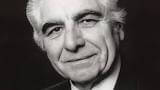
Geraint Evans Welsh bass-baritone 1922- 92
Born: February 16, 1922 - Cilfynydd (or Pontypridd by Glamorgan), South Wales, UK
Died: September 19, 1992 - Aberystwyth (or London), England
A Welshman bass-baritone, Geraint Evans, was born in a small mining town called Cilfynydd, which in English is translated to mean ”the edge of the mountain.” Resonant voices are not rare among Welshmen. Witness Richard Burton, Gweneth Jones, or Dylan Thomas. Back in the Middle Ages, rich-toned Welsh bards used to entertain at court by singing lusty ballads. The Celtic name of Geraint - pronounced Gair-AINT - is that of a legendary hero, one of King Arthur’s Knights of the Round Table. In light of these several facts it is no surprise that Geraint Evans one day became the world’s most foremost interpreter of Verdi’s fat knight, Sir John Falstaff, as well as the proud recipient of the title Commander of the British Empire, conferred upon him in 1959 by Queen Elizabeth II.
The Welsh seem to be a race apart, though physically and temperamentally they have often been likened to Italians. When a Welshman is excited, his speech becomes rapid-fire, like that of an Italian. Geraint Evans, typically Welsh in appearance and manner, has dark, penetrating eyes, swarthy complexion, and thick, black hair. In 1960, while at La Scala singing the title role in Mozart’s Le Nozze di Figaro, he was thought by many Milanese to be a Sicilian; this physical impression, which amused the singer greatly, was doubtless abetted by his flawless Italian diction. Like other Welshmen, however, Evans strongly asserts his ethnic difference from other peoples.
Born to a musical family, Geraint Evans sang as a boy soprano in his local church choir, which was conducted by one of Cilfynydd’s best musicians, his own father. The elder Evans recognized his son’s vocal talent early and gave him every musical opportunity, including violin lessons. By the age of seventeen, Geraint’s singing voice had deepened into a mellow baritone and he was invited to appear as soloist in a performance of Mendelssohn’s Elijah. This engagement brought him to the attention of Idloese Owen, a noted choral director, who persuaded him to undertake serious vocal training; while doing so, Evans became associated with Owen’s Lyrian Singers.
Geraint Evans’ studies, however, were interrupted by the outbreak of World War II, during which he served in the Royal Air Force. When hostilities ceased, Evans was stationed in Germany, where he took the opportunity to resume his vocal training, this time with the well-known German bass Theo Hermann, who had first heard the young singer on his own radio program broadcast by the British Forces Network. (Later, Evans also studied in Geneva with Fernando Carpi and at London’s Guildhall School of Music.) Through Hermann he met Karl Rankl, then musical director of the Royal Opera, Covent Garden. His first audition netted him a contract. His debut, in 1948, was in the brief role of the Night Watchman in Wagner’s Die Meistersinger, a work in which he was one day to star as the conniving town clerk, Sixtus Beckmesser.
Fortunately for Geraint Evans, Covent Garden is one leading opera house that builds stars from its own ranks. Joan Sutherland was the first ”resident” artist after the war to achieve international acclaim. He was the second, though it might be noted that he made his La Scala debut before the soprano’s. At Covent Garden, after beginning in short roles, he quickly rose to stature, alternating in comic and dramatic assignments. The variety of repertory produced by the theatre broadened his innate sense of style while developing his natural penchant for acting. He was as likely to be cast as Mozart’s jolly bird-catcher Papageno as Alban Berg’s tragic Wozzeck. Directors from the legitimate theatre - among them Tyrone Guthrie, Peter Brook, and John Gielgud - found in Evans an ideal collaborator when they would visit Covent Garden to stage operas.
Geraint Evans first became identified with the role of Sir John Falstaff at the 1950 Glyndebourne Festival, and he was subsequently selected to sing the Verdi role in a phenomenally successful Covent Garden production in 1961, staged and designed by the mercurial Franco Zeffirelli. Since then Evans has also sung the role with the San Francisco Opera (where he is a regular), in Buenos Aires, and in Italy. He made his Metropolitan Opera in New York debut as Falstaff in 1964 in yet another production staged by Zeffirelli. No less remarkable, however, are his rebellious Figaro, his evil Don Pizarro, or his delightful Leporello, all of which he has sung at the Metropolitan. Of his Leporello, critic Irving Kolodin has written, ”the most artfully sung servant in decades…acted with typically English conviction that to be a fine servant is no less a distinction than to be a worthy master.”
Offstage, Geraint Evans lives with his wife, Brenda, and two young sons in a large house in Kent, just outside London. Mrs. Evans is also Welsh, and, according to her husband, his best and most severe critic. A busy career leaves him little time for leisure; there is always new music to master, old roles to polish up. (It took the bass-baritone two years to find spare time to pick up an honorary doctorate of music bestowed upon him by the University of Wales.) Between his far-flung engagements he likes to play cricket with his sons, to go sailing, and to paint, mostly in watercolors. A good-natured man, he finds his greatest joy in his family and work. And just as he has found infinite variety in his work, so music has found infinite variety in the art of Geraint Evans.
IN SWEDISH
Han utbildade sig i Hamburg där han från 1945 var anställd vid en engelsk radiostation för soldater.Han debuterade 1948 på Covent Garden där han var medlem av ensemblen till 1984.Han medverkade bl.a. vid uruppförandet av Brittens Billy Budd (1951) och Gloriana (1953) och i Waltons Trolius and Cressida (1954).Till hans glanspartier hörde Falstaff, som han också sjöng i Glyndebourne och vid sin debut på Metropolitan 1963,Figaro i Figaros bröllop, som han kreerade även vid festspelen i Salzburg 1962,samt Alban Bergs Wozzeck.
MEtropolitan Opera
| [Met Performance] CID:197670 Falstaff {71} Metropolitan Opera House; 03/25/1964 Debut: Geraint Evans Review |
| [Met Performance] CID:197840 Falstaff {73} Metropolitan Opera House; 04/7/1964 |
| [Met Performance] CID:197910 Falstaff {74} Metropolitan Theater, Boston, Massachusetts; 04/13/1964 Review |
| [Met Performance] CID:200290 Falstaff {83} Metropolitan Opera House; 11/11/1964 Review |
| [Met Performance] CID:200970 Le Nozze di Figaro {206} Metropolitan Opera House; 01/16/1965 |
| [Met Performance] CID:201020 Le Nozze di Figaro {207} Metropolitan Opera House; 01/21/1965 Debut: Gérard Souzay |
| [Met Performance] CID:201040 Opera News Falstaff {88} Metropolitan Opera House; 01/23/1965 Broadcast |
| [Met Performance] CID:201070 Falstaff {89} Metropolitan Opera House; 01/26/1965 |
| [Met Performance] CID:204310 Falstaff {90} Metropolitan Opera House; 10/29/1965 Review |
| [Met Performance] CID:204380 Falstaff {91} Metropolitan Opera House; 11/5/1965 |
[Met Performance] CID:205030 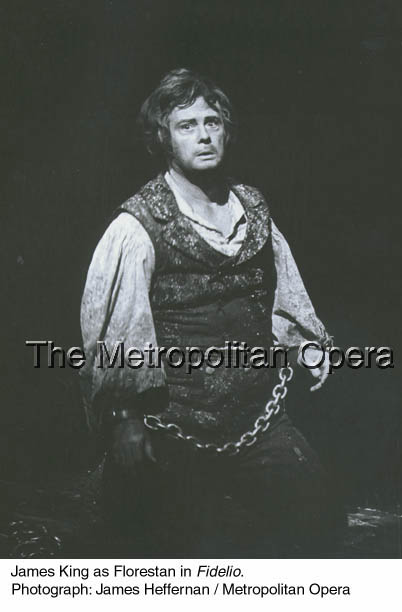 Fidelio {92} Metropolitan Opera House; 01/8/1966 Debut: James King Review |
| [Met Performance] CID:205070 Fidelio {93} Metropolitan Opera House; 01/12/1966 Review |
[Met Performance] CID:205170  Opera News Opera NewsFidelio {94} Metropolitan Opera House; 01/22/1966 Broadcast |
| [Met Performance] CID:205240 Don Giovanni {252} Metropolitan Opera House; 01/29/1966 Broadcast Review |
| [Met Performance] CID:205280 Don Giovanni {253} Metropolitan Opera House; 02/1/1966 |
| [Met Performance] CID:205310 Don Giovanni {254} Metropolitan Opera House; 02/4/1966 |
| [Met Performance] CID:205390 Don Giovanni {255} Metropolitan Opera House; 02/11/1966 Debut: Pilar Lorengar Review |
| [Met Performance] CID:205420 Don Giovanni {256} Metropolitan Opera House; 02/14/1966 |
| [Met Performance] CID:205450 Falstaff {92} Metropolitan Opera House; 02/17/1966 Review |
| [Met Performance] CID:205510 Falstaff {93} Metropolitan Opera House; 02/23/1966 |
[Met Performance] CID:209190 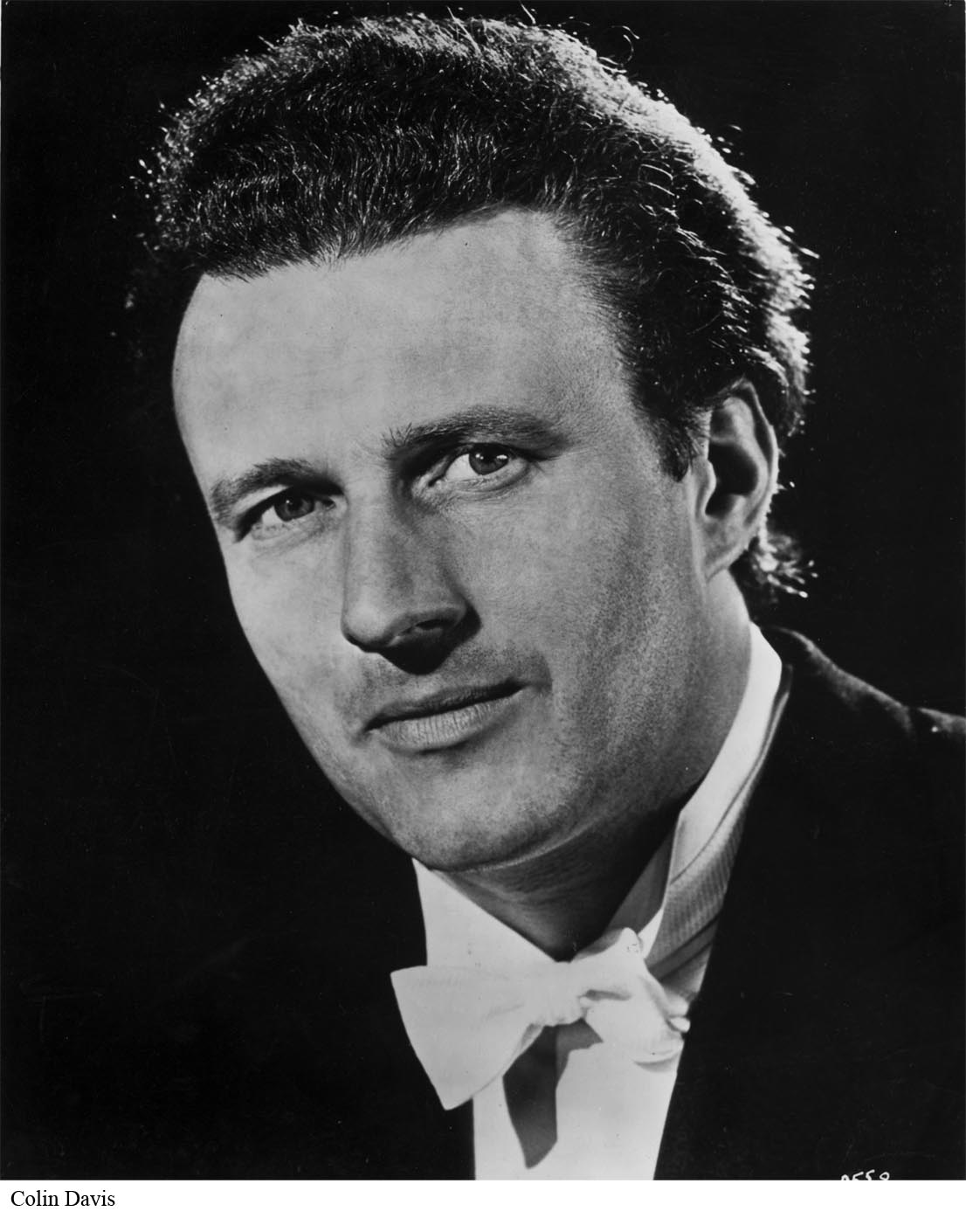 New production Peter Grimes {13} Metropolitan Opera House; 01/20/1967 Debuts: Guy Curtis, Madelyn Coppock, Colin Davis, Tanya Moiseiwitsch Reviews |
| [Met Performance] CID:209230 Peter Grimes {14} Metropolitan Opera House; 01/24/1967 |
| [Met Performance] CID:209410 Opera News Peter Grimes {15} Metropolitan Opera House; 02/11/1967 Broadcast |
| [Met Performance] CID:209450 Peter Grimes {16} Metropolitan Opera House; 02/15/1967 |
| [Met Performance] CID:209460 Die Meistersinger von Nürnberg {332} Metropolitan Opera House; 02/16/1967 Review |
| [Met Performance] CID:209510 Die Meistersinger von Nürnberg {333} Metropolitan Opera House; 02/20/1967 |
| [Met Performance] CID:209570 Peter Grimes {17} Metropolitan Opera House; 02/25/1967 |
| [Met Performance] CID:209680 Peter Grimes {18} Metropolitan Opera House; 03/9/1967 |
| [Met Performance] CID:216940 Don Giovanni {275} Metropolitan Opera House; 12/17/1968 Debut: Teresa Zylis-Gara Reviews |
| [Met Performance] CID:216970 Don Giovanni {276} Metropolitan Opera House; 12/20/1968 |
| [Met Performance] CID:217000 Don Giovanni {277} Metropolitan Opera House; 12/23/1968 |
| [Met Performance] CID:217810 Peter Grimes {19} Metropolitan Opera House; 03/13/1969 Debuts: Gail Leonard, John Allan Review |
| [Met Performance] CID:217860 Peter Grimes {20} Metropolitan Opera House; 03/18/1969 |
| [Met Performance] CID:217890 Peter Grimes {21} Metropolitan Opera House; 03/21/1969 Review |
| [Met Performance] CID:218020 Wozzeck {15} Metropolitan Opera House; 04/2/1969 Debuts: Richard Best, René Mack |
| [Met Performance] CID:218050 Opera News Peter Grimes {22} Metropolitan Opera House; 04/5/1969 Broadcast |
| [Met Performance] CID:218090 Wozzeck {16} Metropolitan Opera House; 04/8/1969 |
| [Met Performance] CID:218120 Peter Grimes {23} Metropolitan Opera House; 04/10/1969 |
| [Met Performance] CID:218140 Wozzeck {17} Metropolitan Opera House; 04/12/1969 Broadcast |
| [Met Performance] CID:218160 Peter Grimes {24} Metropolitan Opera House; 04/14/1969 Review |
| [Met Performance] CID:218200 Wozzeck {18} Metropolitan Opera House; 04/17/1969 |
| [Met Performance] CID:218230 Peter Grimes {25} Metropolitan Opera House; 04/19/1969 |
| [Met Performance] CID:228590 Falstaff {108} Metropolitan Opera House; 02/25/1972 Debut: Christoph Von Dohnányi |
| [Met Performance] CID:228650 Falstaff {109} Metropolitan Opera House; 03/2/1972 |
| [Met Performance] CID:228700 Falstaff {110} Metropolitan Opera House; 03/7/1972 |
| [Met Performance] CID:228780 Falstaff {111} Metropolitan Opera House; 03/15/1972 |
| [Met Performance] CID:228820 Falstaff {112} Metropolitan Opera House; 03/18/1972 |
| [Met Performance] CID:232720 Peter Grimes {26} Metropolitan Opera House; 02/26/1973 Debut: Sixten Ehrling Review |
| [Met Performance] CID:274170 Peter Grimes {37} Metropolitan Opera House; 10/13/1983 Debut: Kirk Peterson Review |
